
A surprising new look at the rise of ADHD in America, arguing for a better paradigm for diagnosing and treating our children In 1987, only 3 percent of American children were diagnosed with attention-deficit/hyperactivity disorder, also known as ADHD. By 2000, that number jumped…
In 1987, only 3 percent of American children were diagnosed with attention-deficit/hyperactivity disorder, also known as ADHD. By 2000, that number jumped to 7 percent, and in 2014 the number rose to an alarming 11 percent. To combat the disorder, two thirds of these children, s…

"A trade book making the economic case for more systematic support of parents in developing their children's skills"--

"A trade book making the economic case for more systematic support of parents in developing their children's skills"--

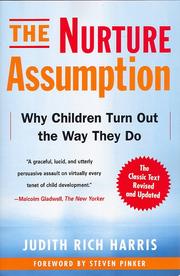
"Explains why parents have little power to determine the sort of people their children become. It is what children experience outside the home, in the company of their peers, that matters most. Parents don't socialize children: children socialize children."--Publisher's descript…
Overview: This groundbreaking book, a Pulitzer Prize finalist and New York Times notable pick, rattled the psychological establishment when it was first published in 1998 by claiming that parents have little impact on their children's development. In this tenth anniversary editi…
Overview: This groundbreaking book, a Pulitzer Prize finalist and New York Times notable pick, rattled the psychological establishment when it was first published in 1998 by claiming that parents have little impact on their children's development. In this tenth anniversary editi…
Overview: This groundbreaking book, a Pulitzer Prize finalist and New York Times notable pick, rattled the psychological establishment when it was first published in 1998 by claiming that parents have little impact on their children's development. In this tenth anniversary edi…
