"This volume advances our understanding of early Christianity as a lived religion by approaching it through its rites, the emotions and affects surrounding those rites, and the material setting for the practice of them. The connections between emotions and ritual, between rites …
Taking its cue from the study of 'lived religion', Secular Bodies, Affects and Emotions shows how the idea of a secular public is equally marked by a display and cultivation of affect and emotions. Whereas it is widely agreed that religion is often saturated by emotion, the secu…
"Taking its cue from the study of 'lived religion', Secular Bodies, Affects and Emotions shows how the idea of a secular public is equally marked by a display and cultivation of affect and emotions. Whereas it is widely agreed that religion is often saturated by emotion, the sec…
Taking its cue from the study of 'lived religion', Secular Bodies, Affects and Emotions shows how the idea of a secular public is equally marked by a display and cultivation of affect and emotions. Whereas it is widely agreed that religion is often saturated by emotion, the secu…
Religion appears to be about God, messiahs, churchgoing, and morality, but that is only the appearance. It is really about lust, rage, grief, love and the other core emotions. Why We Need Religion is about the way religion successfully manages human emotions, for the good of the…
"Stephen T. Asma argues that religion, like art, has direct access to our emotional lives in ways that science does not. Science can cause curiosity and wonder, but much emotional suffering and vulnerability is beyond the reach of scientific help. Unlike secular authors who prai…
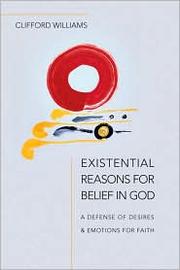
Philosopher Clifford Williams puts forth an argument as to why certain needs, desires and emotions have a legitimate place in drawing people into faith in God. Addressing the strongest objections to these types of reasons, he shows how the personal and experiential aspects of be…
The Philokalia was published in Venice in 1782. It is an anthology of patristic writings from the Eastern Church, spanning the 4th to the 15th Centuries, which has been the subsequent focus of a significant revival in Orthodox spirituality. It presents an understanding of psycho…
A multi-disciplinary study of the nature of faith and its influence on history and society explores the biological origins and natural evolutions of human spiritual behavior, analyzing the important distinction between spirituality and religion.