Mao's failure to control the Cultural Revolution he unleashed is vividly exemplified by the case of Wuhan, a city plagued by factional violence, paralyzed by workers' strikes, and once officially condemned as a nest of 'counter-revolutionary' rebellion. Many studies of this peri…
"Cultural Revolution Culture is often denigrated as mere propaganda. Yet it was not only liked in its heyday but continues to be enjoyed today. This book sets out to explain this legacy. By considering Cultural Revolution propaganda art--music, stage works, prints and posters, c…
Inhaltsverzeichnis: Prologue -- Factions -- Enter the Army -- Escalation -- Beijing Intervenes -- Forging Order -- Backlash -- The Final Struggle -- Troubled Decade. Verlagsinfo: "Based on an unusually broad and deep range of primary sources (including work diaries, interviews …
"Forbidden Memory: Tibet during the Cultural Revolution provides a glimpse of the history of the Chinese Cultural Revolution in the Tibetan Region through the power of never-before-seen photographs, detailed interviews, and cultural analysis."
"Introduction Of all the political campaigns that reconfigured daily life in the first three decades of the People's Republic of China, the sent-down youth movement that sent 17 million urban youth to live in rural China in 1968-1980 is one of the most vividly remembered and hot…
Chen village: revolution to globalization
by Madsen, Richard, Chan, Anita, Unger, Jonathan
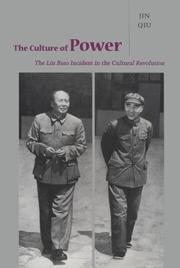
"On the night of September 12-13, 1971, Lin Biao, Mao Zedong's officially recognized closest comrade-in-arms and chosen successor, was killed in a mysterious plane crash in Mongolia. The Chinese government did not issue an announcement of Lin's death, and it became generally kno…