"163" Result
Sort By:
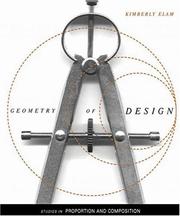
A mathematical explanation of how art works, presented in a manner anyone can understand. Kimberly Elam takes the reader on a geometrical journey, lending insight and coherence to the design process by exploring the visual relationships that have foundations in mathematics as we…
"What do a pine cone, a trout, and the human body have in common? They all have natural proportioning systems that provide the foundation for the work of many, some would say all, artists and designers. Revealing these natural systems, Kimberly Elam uncovers the mysterious relat…
A mathematical explanation of how art works, presented in a manner anyone can understand. Kimberly Elam takes the reader on a geometrical journey, lending insight and coherence to the design process by exploring the visual relationships that have foundations in mathematics as we…


Providing a graduate level introduction to various aspects of stochastic geometry, spatial statistics and random fields, this volume places a special emphasis on fundamental classes of models and algorithms as well as on their applications, for example in materials science, biol…

This book brings together leading contributions from the fifth conference on Fractal Geometry and Stochastics held in Tabarz, Germany, in March 2014. The book is divided into five sections covering different facets of this fast developing area: geometric measure theory, self-sim…

What is order that is not based on simple repetition, that is, periodicity? How must atoms be arranged in a material so that it diffracts like a quasicrystal? How can we describe aperiodically ordered systems mathematically? Originally triggered by the - later Nobel prize-winnin…

This book brings together papers of the conference on 'Space, Geometry and the Imagination from Antiquity to the Modern Age' held in Berlin, Germany, 27-29 August 2012. Focusing on the interconnections between the history of geometry and the philosophy of space in the pre-Modern…


The philosophy of the first part of this work is to understand (and classify) Kummer surfaces by studying (16, 6) configurations. Chapter 1 is devoted to classifying (16, 6) configurations and studying their manifold symmetries and the underlying questions about finite subgroups…

Using concepts from valuation theory, we obtain a characterization of all collinearity-preserving functions from one affine or projective Desarguesian plane into another. The case in which the planes are projective and the range contains a quadrangle has been treated previously …

Numbers and Geometry is a beautiful and relatively elementary account of a part of mathematics where three main fields - algebra, analysis, and geometry - meet. The aim of this book is to give a broad view of these subjects at the level of calculus, without being a calculus (or …

