
In this work of investigative journalism, the author retraces the human response to some of history's epic disasters, from the explosion of the Mont Blanc munitions ship in 1917-one of the biggest explosions before the invention of the atomic bomb-to a plane crash in England in …
"119" Result
Sort By:
Offers a glimpse at disasters and their aftermath, describing the three stages of disaster response, how we react--or do not react--in moments of catastrophe, and how we can train ourselves and other victims to survive in the event of a disaster.

"Nine out of ten Americans live in places at significant risk of earthquakes, hurricanes, tornadoes, terrorism, or other disasters. Tomorrow, some of us will have to make split-second choices to save ourselves and our families. How will we react? What will it feel like? Will we …
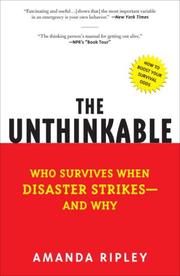
Nine out of ten Americans live in places at significant risk of earthquakes, hurricanes, tornadoes, terrorism, or other disasters. Tomorrow, some of us will have to make split-second choices to save ourselves and our families. How will we react? What will it feel like? Will we b…
Nine out of ten Americans live in places at significant risk of earthquakes, hurricanes, tornadoes, terrorism, or other disasters. Tomorrow, some of us will have to make split-second choices to save ourselves and our families. How will we react? What will it feel like? Will we b…

One way to reduce the impacts of disasters on the nation and its communities is to invest in enhancing resilience. As defined in this report, resilience is the ability to prepare and plan for, absorb, recover from and more successfully adapt to adverse events. The NRC study comm…

One way to reduce the impacts of disasters on the nation and its communities is to invest in enhancing resilience. As defined in this report, resilience is the ability to prepare and plan for, absorb, recover from and more successfully adapt to adverse events. The NRC study comm…

One way to reduce the impacts of disasters on the nation and its communities is to invest in enhancing resilience. As defined in this report, resilience is the ability to prepare and plan for, absorb, recover from and more successfully adapt to adverse events. The NRC study comm…
"In response to a request by the Department of Homeland Security, the National Research Council formed an ad hoc committee to organize a two-day workshop to discuss the use of social network analysis (SNA) for the purpose of building community disaster resilience. The workshop w…


"In response to a request by the Department of Homeland Security, the National Research Council formed an ad hoc committee to organize a two-day workshop to discuss the use of social network analysis (SNA) for the purpose of building community disaster resilience. The workshop w…

"In response to a request by the Department of Homeland Security, the National Research Council formed an ad hoc committee to organize a two-day workshop to discuss the use of social network analysis (SNA) for the purpose of building community disaster resilience. The workshop w…


In this action-oriented book, a survival expert walks you through what to do in dozens of scary situations, from riding out a tsunami to surviving the fall of civilization. Fast-paced and remarkably practical, this latest book from best-selling survival expert Tim MacWelch break…

Hazard mitigation and preparedness
by Schwab, Anna K., Sandler, Dylan, Brower, David J.
0
Type: Book

This book introduces the concept of hazards as part of the earth's natural systems, in contrast to "disasters," which occur at the intersection of the built and natural environments. The authors emphasize choices made by society that either increase or diminish our level of vuln…